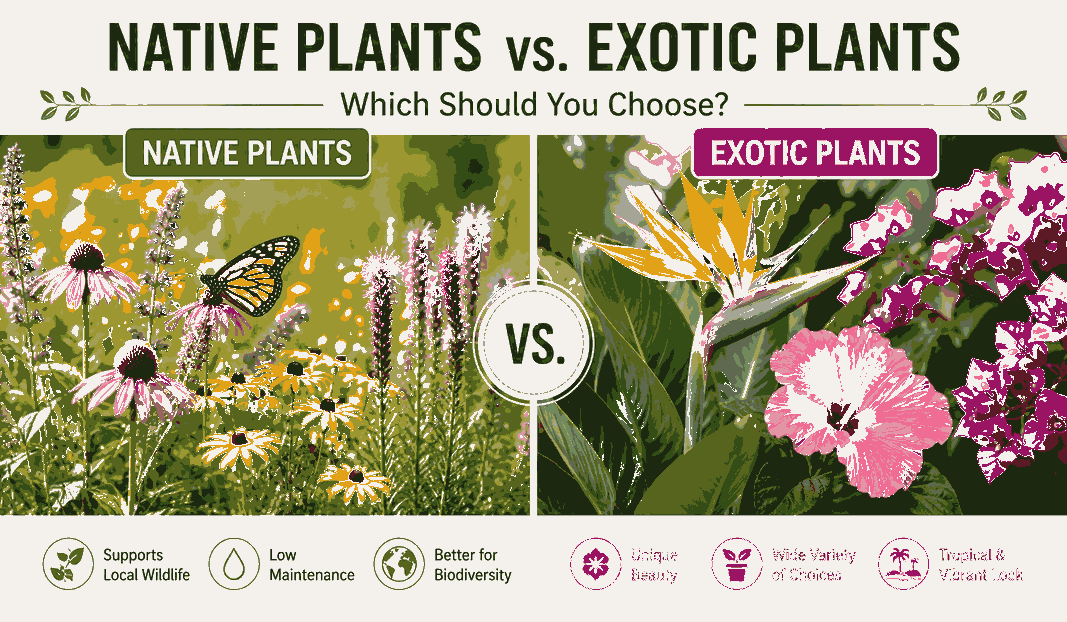
Choosing the right plants for your garden is one of the most important decisions you can make as a homeowner or gardening enthusiast. While many gardeners focus on appearance, factors such as maintenance requirements, environmental impact, biodiversity, and long-term sustainability should also influence plant selection.
One of the most common gardening debates is whether to choose native plants or exotic plants. Both options offer unique benefits and challenges, and the best choice often depends on your gardening goals, local climate, and maintenance preferences.
In this guide, we’ll explore the differences between native and exotic plants, compare their advantages and disadvantages, and help you determine which option is best suited for your landscape.
What Are Native Plants?
Native plants are species that have naturally evolved and grown in a specific region for hundreds or thousands of years. These plants have adapted to local soil conditions, climate patterns, rainfall levels, and wildlife.
Examples of native plants vary by location. In many parts of North America, native species may include coneflowers, black-eyed Susans, milkweed, and oak trees. In India, native species can include neem, banyan, peepal, and various indigenous flowering plants.
Because native plants evolved alongside local ecosystems, they play a critical role in supporting pollinators, birds, and other wildlife.
Benefits of Native Plants
1. Lower Maintenance Requirements
Native plants are naturally adapted to local environmental conditions. They often require less watering, fertilization, and pest control compared to non-native species.
2. Better Drought Resistance
Many native plants have deep root systems that help them survive dry periods and efficiently absorb water from the soil.
3. Support Local Wildlife
Native plants provide food, shelter, and breeding habitats for local birds, butterflies, bees, and other beneficial insects.
4. Reduced Need for Chemicals
Since native plants are adapted to local pests and diseases, gardeners typically use fewer pesticides and fertilizers.
5. Environmental Sustainability
Native landscaping helps conserve water, reduce pollution, and preserve local biodiversity.
Drawbacks of Native Plants
- Limited availability in some garden centers.
- Some native plants may appear less colorful or exotic than imported varieties.
- Certain native species can spread aggressively if not managed properly.
What Are Exotic Plants?
Exotic plants, also known as non-native or introduced plants, originate from regions outside the local ecosystem. They are intentionally brought into new areas for ornamental, agricultural, or landscaping purposes.
Popular exotic plants include orchids, bougainvillea, Japanese maple trees, bird of paradise plants, and many tropical flowers commonly found in decorative gardens.
Exotic plants are often selected because of their unique appearance, vibrant colors, or unusual growth habits.
Benefits of Exotic Plants
1. Unique Aesthetic Appeal
Many exotic plants feature striking flowers, unusual foliage, or distinctive shapes that can create dramatic visual interest.
2. Greater Variety
Gardeners have access to thousands of exotic plant species from around the world, allowing for endless design possibilities.
3. Extended Blooming Seasons
Some exotic plants offer longer flowering periods than native alternatives, providing year-round beauty.
4. Specialized Garden Themes
Exotic plants make it possible to create tropical, Mediterranean, Japanese, or desert-inspired landscapes.
5. Rare and Collectible Options
Plant enthusiasts often enjoy collecting uncommon exotic species that add uniqueness to their gardens.
Drawbacks of Exotic Plants
- Higher water and fertilizer requirements.
- Increased susceptibility to local pests and diseases.
- Greater maintenance needs.
- Potential environmental risks if the species becomes invasive.
- Some exotic plants may struggle to survive harsh local weather conditions.
Which Plants Are Better for Pollinators?
If your goal is to attract bees, butterflies, birds, and other pollinators, native plants are generally the superior choice.
Local pollinators evolved alongside native plant species and often rely on them for nectar, pollen, and habitat. For example, certain butterfly species can only lay eggs on specific native plants.
Exotic plants may provide nectar sources, but they often lack the ecological relationships necessary to support complete wildlife lifecycles.
For gardeners interested in creating a pollinator-friendly landscape, native plants should form the foundation of the garden.
Water Usage and Sustainability
Water conservation is becoming increasingly important in many regions due to climate change and drought concerns.
Native plants typically require significantly less irrigation because they are adapted to local rainfall patterns. Their established root systems help them thrive with minimal supplemental watering.
Exotic plants, particularly tropical varieties grown outside their natural habitat, may need regular irrigation to survive and maintain their appearance.
For eco-conscious gardeners looking to reduce water consumption, native plants offer a more sustainable solution.
Potential Risks of Invasive Exotic Plants
Not all exotic plants are harmful. However, some introduced species can become invasive when they spread aggressively and outcompete native vegetation.
Invasive plants can:
- Reduce biodiversity
- Damage local ecosystems
- Alter soil conditions
- Disrupt wildlife habitats
- Increase management costs
Before introducing an exotic plant into your garden, research whether it is considered invasive in your region.
Responsible plant selection helps protect local ecosystems while still allowing gardeners to enjoy diverse plant collections.
Can Native and Exotic Plants Coexist?
Absolutely.Many successful gardens combine native and exotic plants to achieve both environmental benefits and visual appeal.
A balanced approach may include:
- Native trees and shrubs as the landscape foundation.
- Native flowers for pollinator support.
- Carefully selected non-invasive exotic plants for color and variety.
- Drought-tolerant exotic species that complement local conditions.
This strategy allows gardeners to enjoy the best features of both plant categories while minimizing environmental impact.
Factors to Consider Before Choosing
Climate Compatibility
Select plants that can thrive in your local temperature range, rainfall levels, and growing conditions.
Maintenance Expectations
Consider how much time you’re willing to spend watering, pruning, fertilizing, and controlling pests.
Garden Purpose
Determine whether your primary goal is:
- Wildlife support
- Visual beauty
- Water conservation
- Food production
- Low maintenance landscaping
Environmental Impact
Evaluate how your plant choices affect local biodiversity and ecosystem health.
Budget
Native plants often become more cost-effective over time due to reduced maintenance and resource requirements.
Expert Recommendation
For most homeowners, native plants provide the strongest long-term value. They require fewer resources, support local ecosystems, and generally perform better under regional conditions.
However, exotic plants can still play an important role when selected responsibly. Non-invasive exotic species can add color, texture, and visual interest that may not be available from native plants alone.
The most successful landscapes often combine the ecological benefits of native plants with the aesthetic diversity of carefully chosen exotic varieties.
The choice between native plants and exotic plants ultimately depends on your gardening goals, environmental priorities, and design preferences.
If sustainability, low maintenance, and wildlife support are your top priorities, native plants are usually the best option. If you’re seeking unique colors, dramatic foliage, or specialized garden themes, exotic plants can provide exciting possibilities.
Rather than viewing native and exotic plants as competitors, consider how both can work together to create a beautiful, functional, and environmentally responsible garden. By selecting plants thoughtfully, you can enjoy a thriving landscape that benefits both your property and the surrounding ecosystem.
Whether you’re starting a new garden or updating an existing one, understanding the strengths and limitations of each plant type will help you make informed decisions that deliver lasting results.