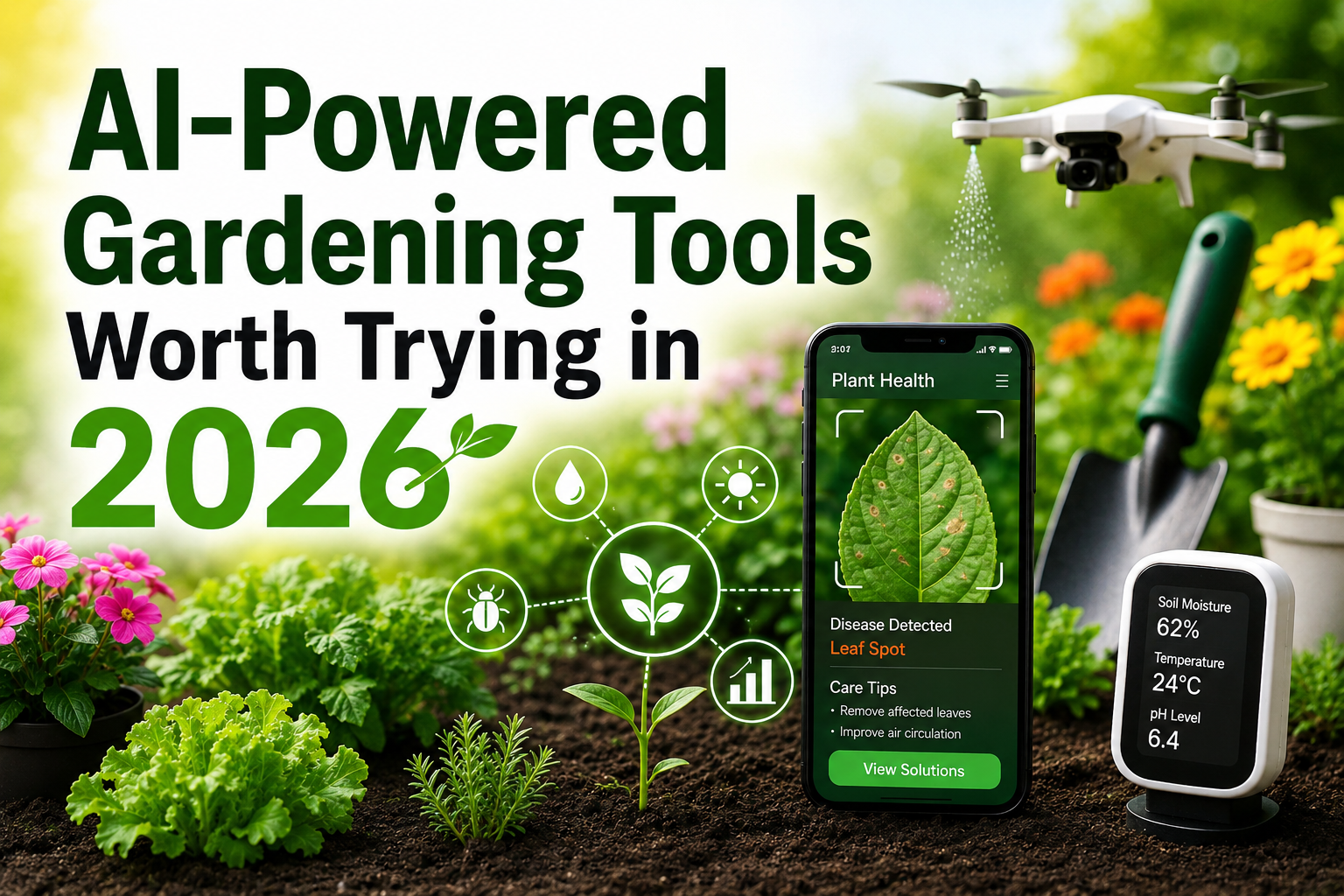
Artificial Intelligence (AI) is transforming nearly every aspect of daily life, and gardening is no exception. From identifying plant diseases to automating watering schedules, AI-powered gardening tools are helping gardeners make smarter decisions, save time, and grow healthier plants.
Whether you’re a beginner maintaining a small backyard garden or an experienced gardener managing a large landscape, AI technology can provide valuable insights that were once available only to professional horticulturists.
In this guide, we’ll explore some of the most useful AI-powered gardening tools worth trying in 2026 and explain how they can improve your gardening success.
Why AI Matters in Modern Gardening
Gardening often involves trial and error. Determining the right watering schedule, identifying pests, choosing suitable plants, and understanding soil conditions can be challenging.
AI-powered tools analyze large amounts of data, including weather patterns, soil information, plant health indicators, and historical growing conditions. These insights help gardeners make informed decisions and reduce common mistakes.
Benefits of AI gardening tools include:
- More accurate plant care recommendations
- Early detection of diseases and pests
- Automated watering and irrigation
- Better resource management
- Increased plant survival rates
- Time savings for busy gardeners
1. Plant Identification Apps
One of the most popular uses of AI in gardening is plant identification.
Modern AI apps can identify thousands of plant species by analyzing a photo taken with a smartphone. These tools are especially useful for gardeners who encounter unfamiliar plants, weeds, flowers, or trees.
Key Features
- Instant plant recognition
- Detailed plant information
- Care instructions
- Growth requirements
- Toxicity warnings
Benefits
Instead of searching through gardening books or websites, gardeners can receive accurate information within seconds, helping them make better planting and maintenance decisions.
2. AI Plant Disease Detection Tools
Plant diseases can spread quickly and damage an entire garden if not addressed early.
AI-powered disease detection tools use image recognition technology to identify symptoms on leaves, stems, flowers, and fruits. Users simply upload a photo, and the system analyzes potential problems.
Common Issues Detected
- Powdery mildew
- Leaf spot diseases
- Fungal infections
- Nutrient deficiencies
- Pest damage
Why It’s Valuable
Early diagnosis allows gardeners to take corrective action before problems become severe, reducing plant loss and improving garden health.
3. Smart Irrigation Systems
Overwatering and underwatering are among the most common gardening mistakes.
AI-enabled irrigation systems monitor factors such as:
- Soil moisture levels
- Weather forecasts
- Temperature
- Humidity
- Plant water requirements
These systems automatically adjust watering schedules based on real-time conditions.
Advantages
- Conserves water
- Prevents root rot
- Reduces water bills
- Promotes healthier plant growth
For regions experiencing water shortages or drought conditions, smart irrigation can significantly improve sustainability.
4. AI Gardening Assistants
Virtual gardening assistants are becoming increasingly sophisticated.
These AI tools act like personal gardening consultants, providing recommendations based on your location, climate, and plant selection.
Typical Functions
- Planting calendar suggestions
- Fertilization reminders
- Seasonal maintenance tips
- Pest management advice
- Harvest predictions
User Experience
Many AI assistants are available through mobile apps and can answer gardening questions in real time, making expert guidance accessible to everyone.
5. Smart Soil Monitoring Sensors
Healthy soil is the foundation of successful gardening.
AI-powered soil sensors continuously monitor critical factors, including:
- Soil moisture
- pH levels
- Nutrient content
- Temperature
- Salinity
The collected data is analyzed using AI algorithms to provide actionable recommendations.
Benefits
Gardeners can avoid guesswork and apply fertilizers, compost, or soil amendments only when needed, improving plant growth while reducing unnecessary expenses.
6. AI Weather Forecasting for Gardeners
Weather has a major impact on gardening success.
AI-enhanced weather tools provide highly localized forecasts specifically designed for gardeners.
Features
- Frost warnings
- Rain predictions
- Heat alerts
- Wind forecasts
- Growing condition assessments
Why It Helps
Knowing about upcoming weather events allows gardeners to protect vulnerable plants, adjust watering schedules, and plan gardening activities more effectively.
7. Robotic Lawn and Garden Maintenance Tools
Automation is becoming a major trend in home gardening.
AI-powered robotic devices can perform tasks such as:
- Lawn mowing
- Weed detection
- Garden monitoring
- Basic maintenance
Advanced systems use cameras and machine learning to navigate outdoor spaces efficiently.
Advantages
- Reduces physical labor
- Saves time
- Maintains consistent results
- Operates autonomously
These tools are especially useful for homeowners with large gardens or limited time for maintenance.
8. AI Garden Planning Software
Designing a productive garden requires careful planning.
AI-powered garden planners help users create optimized layouts based on:
- Available space
- Sunlight exposure
- Climate conditions
- Plant compatibility
- Growth patterns
Key Benefits
The software can recommend ideal plant combinations and spacing arrangements, reducing overcrowding and improving yields.
Gardeners can also visualize future growth before planting begins.
How to Choose the Right AI Gardening Tool
Not every gardener needs every AI tool. The best choice depends on your gardening goals.
For Beginners
Consider:
- Plant identification apps
- AI gardening assistants
- Disease detection tools
These provide immediate value and require minimal setup.
For Vegetable Gardeners
Focus on:
- Soil monitoring sensors
- Smart irrigation systems
- Weather forecasting tools
These solutions directly impact crop production and plant health.
For Large Landscapes
Look into:
- Robotic maintenance equipment
- Advanced irrigation systems
- Comprehensive garden management platforms
These tools help reduce labor while maintaining efficiency.
The Importance of E-E-A-T in Gardening Advice
When researching gardening information online, it’s important to evaluate content based on Google’s E-E-A-T principles:
Experience
Advice should come from individuals who actively garden and have practical, hands-on knowledge.
Expertise
Information should be based on horticultural best practices, scientific research, and proven gardening techniques.
Authoritativeness
Reliable gardening resources often reference universities, agricultural extensions, botanical organizations, and professional growers.
Trustworthiness
Recommendations should be transparent, accurate, and focused on helping gardeners achieve successful outcomes rather than simply promoting products.
As AI gardening tools become more common, users should verify recommendations and combine technology with sound gardening practices.
Potential Limitations of AI Gardening Tools
While AI offers many benefits, it is not perfect.
Some limitations include:
- Misidentification of plants or diseases
- Dependence on image quality
- Subscription costs for premium features
- Limited effectiveness in unusual growing conditions
- Need for internet connectivity
Gardeners should view AI as a helpful assistant rather than a complete replacement for observation and experience.
AI-powered gardening tools are making gardening more accessible, efficient, and data-driven than ever before. From plant identification apps and disease detection systems to smart irrigation and soil monitoring technologies, these innovations help gardeners make informed decisions and achieve better results.
The best approach is to start with tools that address your biggest gardening challenges. Beginners may benefit from plant identification apps and AI assistants, while experienced gardeners can take advantage of advanced monitoring systems and automated maintenance solutions.
By combining practical gardening knowledge with modern AI technology, gardeners can enjoy healthier plants, higher yields, and a more rewarding gardening experience.