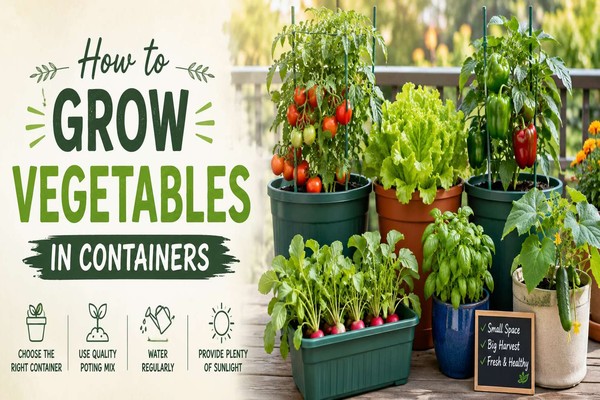
Container gardening is one of the easiest and most rewarding ways to grow fresh vegetables, even if you have limited space. Whether you live in an apartment, have a small balcony, or simply want a more manageable garden, containers allow you to enjoy homegrown produce without the need for a large backyard.
From tomatoes and peppers to lettuce and herbs, many vegetables thrive in pots when given the right conditions. In this guide, you’ll learn everything you need to know about growing vegetables in containers, including choosing the right containers, selecting suitable vegetables, preparing soil, watering correctly, and maximizing your harvest.
Why Grow Vegetables in Containers?
- Ideal for small spaces
- Better control over soil and nutrients
- Fewer weeds
- Reduced pests
- Easy to move containers
Step 1: Choose the Right Containers
| Material | Advantages |
|---|---|
| Plastic | Lightweight, inexpensive, retains moisture |
| Terracotta | Breathable and attractive |
| Fabric Grow Bags | Excellent drainage and aeration |
| Wood | Natural insulation |
| Metal | Durable but may overheat |
| Vegetable | Minimum Container Size |
|---|---|
| Lettuce | 6–8 inches |
| Spinach | 6–8 inches |
| Radishes | 8 inches |
| Peppers | 12 inches |
| Tomatoes | 14–18 inches |
| Cucumbers | 12–18 inches |
| Eggplants | 14–18 inches |
Tip: Always choose containers with drainage holes to prevent root rot.
Step 2: Select Easy Vegetables
Start with cherry tomatoes, peppers, lettuce, spinach, radishes, green onions, bush beans, cucumbers, basil, and parsley.
Beginner-Friendly Vegetables
- Cherry Tomato
- Bell Pepper
- Lettuce
- Spinach
- Radish
- Green Onion
- Bush Bean
- Cucumber
- Basil
- Parsley
These crops grow quickly and provide reliable harvests.
Step 3: Use High-Quality Potting Mix
Do not fill containers with ordinary garden soil. Garden soil becomes compacted in pots and can restrict root growth.
A Good Potting Mix Should Contain:
- Peat moss or coco coir for moisture retention
- Perlite or vermiculite for drainage
- Compost for nutrients
- Organic matter for healthy microbial activity
DIY Potting Mix
Mix:
- 40% coco coir or peat moss
- 30% compost
- 20% perlite
- 10% vermiculite
This creates a light, well-draining growing medium ideal for vegetables.
Step 4: Provide Enough Sunlight
Most vegetables need 6–8 hours of direct sunlight each day.
Full-sun vegetables
6–8+ hrs
- Tomatoes
- Peppers
- Cucumbers
- Eggplants
- Beans
Partial-sun vegetables
4–6 hrs
- Lettuce
- Spinach
- Kale
- Green onions
- Herbs
Tip
If your balcony receives limited sunlight, focus on leafy greens and herbs rather than fruiting vegetables.
Step 5: Plant Correctly
For Seeds
- Fill the container with potting mix.
- Sow seeds according to packet depth instructions.
- Water gently.
- Keep the soil consistently moist until germination.
For Seedlings
- Make a hole slightly larger than the root ball.
- Place the seedling at the same depth it was growing in its nursery pot.
- Firm the soil gently around the roots.
- Water thoroughly.
Step 6: Water Consistently
| Weather | Watering Frequency |
|---|---|
| Cool | Every 2–3 days |
| Warm | Daily |
| Very Hot | 1–2 times daily |
Step 7: Feed Your Plants
Vegetables are heavy feeders, and nutrients wash out of containers over time.
Fertilizing Schedule
| Plant Type | Fertilizer |
| Leafy greens | Nitrogen-rich fertilizer |
| Tomatoes & peppers | Balanced vegetable fertilizer |
| Root vegetables | Low-nitrogen fertilizer |
General Rule
Apply a diluted liquid fertilizer every 2–3 weeks during the growing season.
Step 8: Support Tall Plants
Some container vegetables need support structures.
Use stakes, cages, or trellises for:
- Tomatoes
- Cucumbers
- Climbing beans
- Peas
Installing supports early prevents root damage later.
Step 9: Watch for Pests
| Pest | Solution |
|---|---|
| Aphids | Spray with water or insecticidal soap |
| Whiteflies | Yellow sticky traps |
| Spider Mites | Increase humidity and rinse leaves |
| Caterpillars | Hand-pick regularly |
Best Vegetables by Container Size
| Container Size | Recommended Vegetables |
|---|---|
| 1–3 gallons | Lettuce, herbs, spinach |
| 3–5 gallons | Bush beans, radishes |
| 5–10 gallons | Peppers, cucumbers |
| 10–20 gallons | Tomatoes, eggplants |
Seasonal Container Gardening
Spring
- Lettuce
- Spinach
- Radishes
- Peas
Summer
- Tomatoes
- Peppers
- Cucumbers
- Beans
Autumn
- Kale
- Spinach
- Lettuce
- Green onions
By rotating crops seasonally, you can harvest vegetables for much of the year.
Common Mistakes to Avoid
Avoid these beginner mistakes
- Using containers without drainage holes
- Planting too many vegetables in one pot
- Using heavy garden soil
- Inconsistent watering
- Insufficient sunlight
- Over-fertilizing
- Ignoring pest problems until they spread
Avoiding these mistakes dramatically improves your chances of success.
A Simple Container Garden Plan for Beginners
Start with just three containers

Container gardening is a simple, space-saving way to grow fresh vegetables at home. With the right containers, quality soil, consistent watering, and plenty of sunlight, beginners can enjoy productive harvests throughout the growing season.
Frequently Asked Questions
What vegetables grow best in containers?
Cherry tomatoes, peppers, lettuce, spinach, radishes, cucumbers, basil, parsley, and bush beans are among the easiest and most productive container vegetables.
How often should I water container vegetables?
Check the soil daily. Most container vegetables need watering once a day during warm weather and twice a day during very hot conditions.
Can I use garden soil in containers?
No. Garden soil compacts easily and drains poorly in pots. Use a high-quality potting mix designed for containers.
How much sunlight do container vegetables need?
Most fruiting vegetables such as tomatoes and peppers require 6–8 hours of direct sunlight. Leafy greens can often grow with 4–6 hours.
What is the biggest mistake in container gardening?
The most common mistake is overwatering. Containers must have drainage holes, and the soil should be allowed to dry slightly between waterings.