Most people know they should have a morning routine. The problem is that life gets in the way.
Between work, family responsibilities, commuting, emails, and never-ending to-do lists, mornings can feel like a race against the clock. If you’re constantly rushing out the door with coffee in one hand and your phone in the other, you’re not alone.
The good news is that building a morning routine doesn’t mean waking up at 5 a.m. or following a complicated schedule you saw on social media. A good routine is simply a set of small habits that help you start the day feeling a little calmer, more focused, and more in control.
Here’s how to build a morning routine that actually works when you’re always busy.
Start by Making Mornings Easier, Not Longer
One of the biggest mistakes people make is trying to add too many things to their mornings. They plan to exercise for an hour, meditate, journal, read, cook a healthy breakfast, and answer emails—all before work.
That usually lasts about three days.
Instead of creating a longer morning, focus on creating an easier one. Ask yourself:
“What is one thing that would make my mornings less stressful?”
For some people, it’s preparing clothes the night before. For others, it’s waking up 15 minutes earlier. Start there.
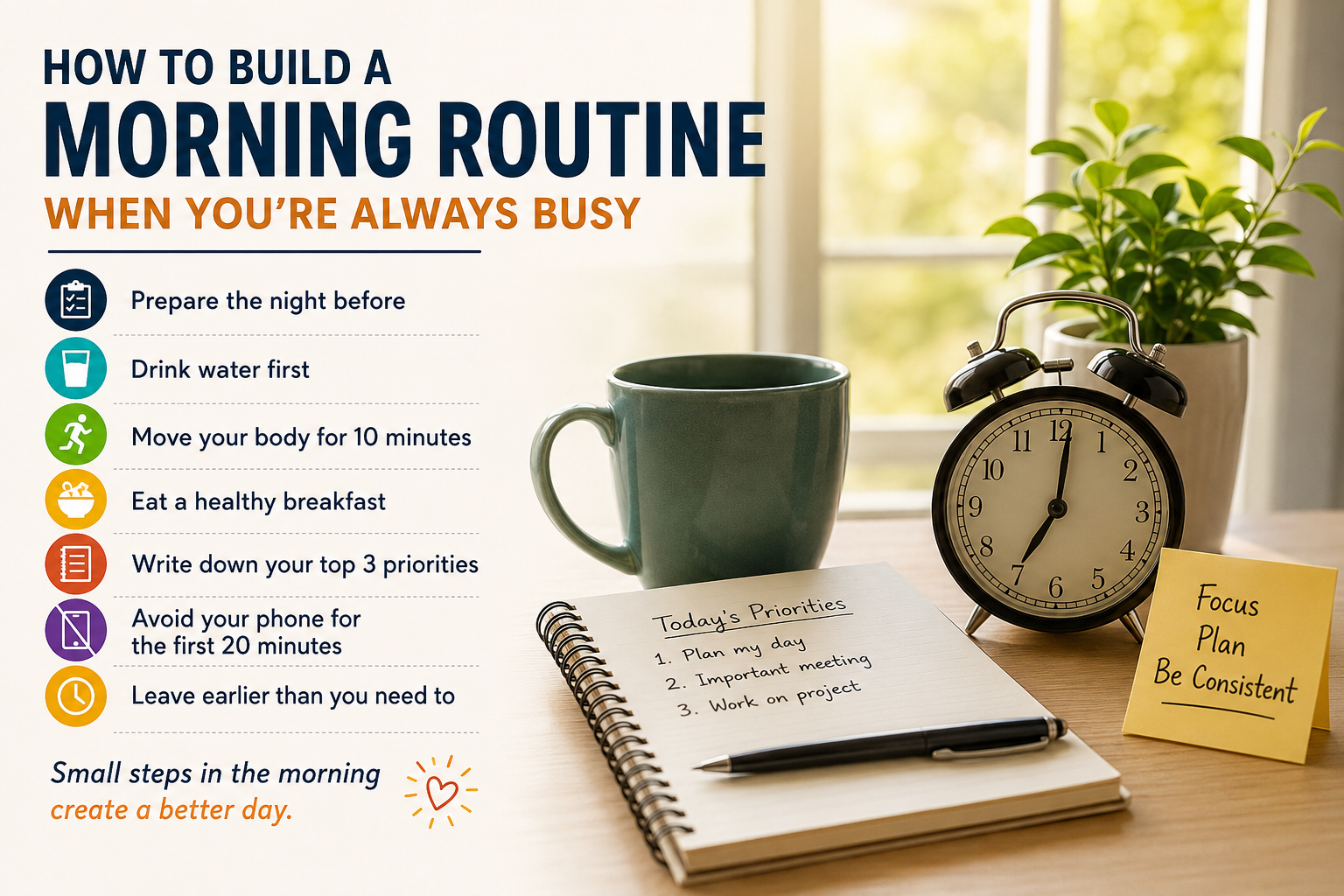
Prepare the Night Before
If there’s one habit that consistently saves busy people time, it’s evening preparation.
Spend 10–15 minutes before bed getting ready for the next day.
Simple things to prepare:
- Your outfit
- Work bag
- Lunch or snacks
- Keys and wallet
- Important documents
- Kids’ school items
It may not sound exciting, but this single habit can remove a surprising amount of morning chaos.
Stop Hitting Snooze
Most busy people already struggle with time, so losing an extra 20–30 minutes to the snooze button doesn’t help.
Try placing your alarm across the room. Once you’re out of bed, open the curtains immediately and let natural light wake you up.
The first few days may feel difficult, but many people find they actually feel less groggy when they stop repeatedly waking themselves up.
Drink Water First
Before coffee, before social media, before checking messages—drink a glass of water.
After several hours of sleep, your body is naturally dehydrated. Water helps you feel more alert and energized without requiring any extra effort.
Keep a bottle or glass beside your bed so the habit becomes automatic.
Avoid Your Phone for the First 20 Minutes
This one is hard, but it makes a huge difference.
When you check emails, news, or social media immediately after waking up, your brain shifts into reaction mode. Suddenly you’re thinking about work problems, other people’s opinions, and everything you haven’t done yet.
Give yourself a short window before the digital world takes over.
Use those first 20 minutes for you instead.
Move Your Body for Just 10 Minutes
You don’t need a full workout.
A short walk, a few stretches, or some simple bodyweight exercises can wake up your body and improve your mood.
Busy people often skip exercise because they think they need a full hour. In reality, 10 consistent minutes is far better than zero.
Eat Something Simple and Healthy
Skipping breakfast might save a few minutes, but many people end up feeling tired and hungry before noon.
Keep breakfast simple.
Easy options include:
- Oatmeal with fruit
- Greek yogurt
- Boiled eggs
- Whole-grain toast
- A smoothie
The goal isn’t perfection—it’s giving your body some fuel before the day gets busy.
Choose Your Top Three Priorities
Instead of looking at a giant to-do list, identify the three most important things you need to accomplish today.
Write them down.
This creates clarity and helps you focus on what actually matters rather than constantly reacting to small tasks.
Create a Simple Morning Checklist
When you’re busy, it’s easy to forget things.
A quick checklist can help.
Drink water
Make the bed
Move for 10 minutes
Eat breakfast
Review priorities
Pack essentials
Checklists reduce mental clutter and make routines easier to follow.
Leave a Little Earlier Than You Need To
One small buffer can change the entire tone of your morning.
Try leaving 10–15 minutes earlier than absolutely necessary. That extra time can absorb traffic, misplaced items, or unexpected delays without turning your morning into a stressful sprint.
A Realistic 30-Minute Morning Routine
If you’re wondering what this looks like in real life, here’s a simple example:

That’s it. Nothing extreme.
The Secret: Build It One Habit at a Time
You don’t need to transform your life overnight.
In fact, the most sustainable routines are usually built one habit at a time.
Start with just one of these:
- Prepare the night before.
- Drink water first thing.
- Stop hitting snooze.
- Walk for 10 minutes.
- Write down three priorities.
Once that habit feels automatic, add another.
If you’re always busy, your morning routine doesn’t need to be perfect. It just needs to help you feel a little less rushed and a little more prepared.
The best routine is the one you can actually maintain during real life—not during an ideal week with no stress, no deadlines, and unlimited time.
Start small. Keep it simple. And remember: even a 15-minute intentional morning is often better than an hour of chaos.
Over time, those small habits can add up to more productive days, less stress, and a greater sense of control over your schedule.
And for busy people, that might be the most valuable life hack of all.