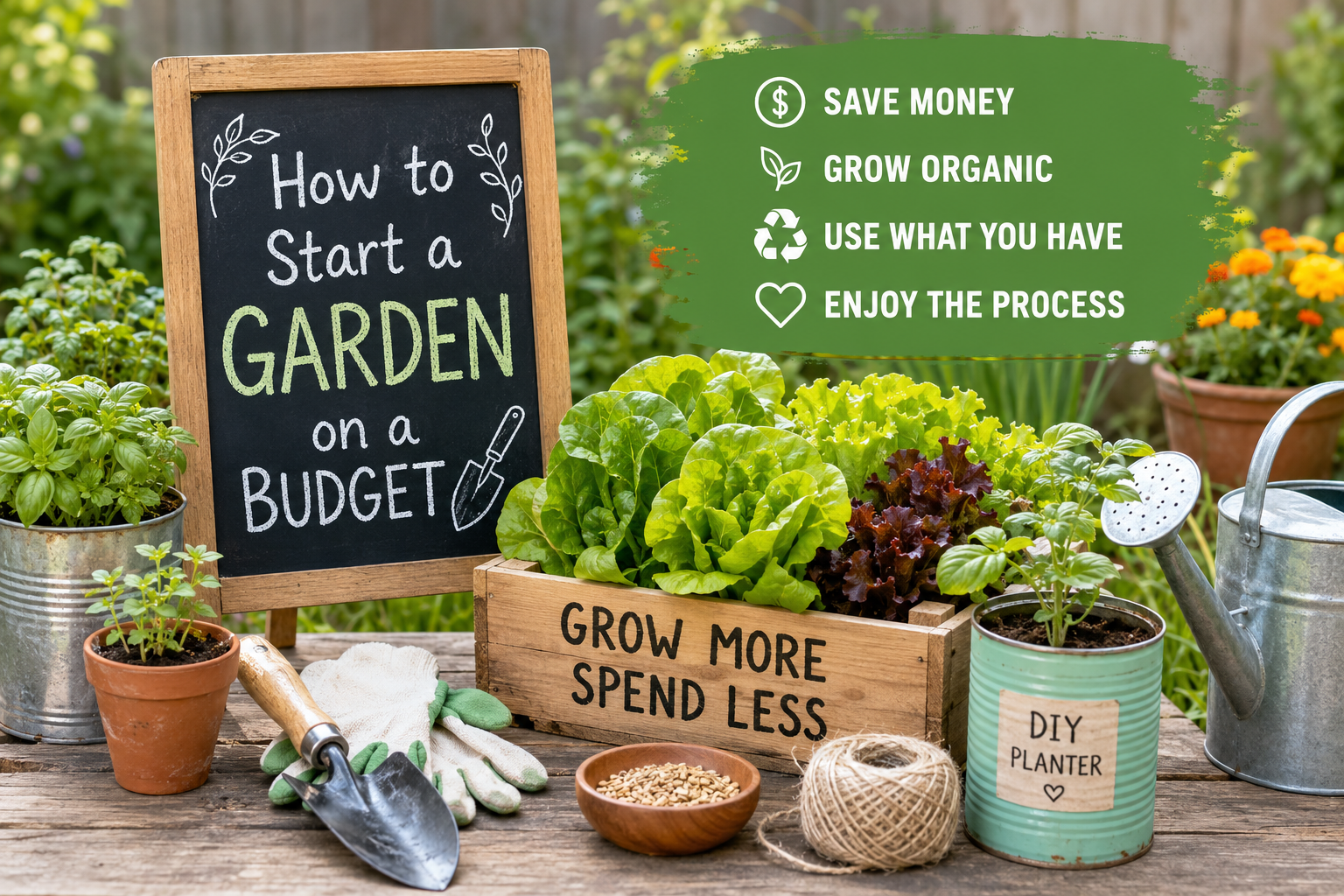
Starting a garden doesn’t have to be expensive. With careful planning and smart choices, anyone can create a beautiful and productive garden without spending a fortune. Whether you want to grow vegetables, herbs, flowers, or decorative plants, budget gardening allows you to enjoy nature while saving money. By using recycled materials, growing plants from seeds, and making your own compost, you can reduce costs significantly. This guide covers eight essential tips that will help beginners build a thriving garden on a budget while avoiding unnecessary expenses.
1. Plan Your Garden Before You Spend
A successful budget garden begins with a solid plan. Before buying seeds, plants, or tools, decide what you want to grow and how much space you have available. Observe your garden’s sunlight, soil condition, and water access. Planning helps you avoid impulse purchases and ensures every dollar is spent wisely. Starting with a small garden also makes maintenance easier and gives you the confidence to expand in future seasons without overspending.
Key Tips:
- Measure your available gardening space.
- Choose plants suited to your local climate.
- Prioritize vegetables and herbs you use regularly.
- Create a simple planting layout.
- Set a realistic gardening budget.
2. Start with Seeds Instead of Mature Plants
Growing plants from seeds is one of the easiest ways to reduce gardening expenses. Seed packets are inexpensive and often contain dozens of seeds, allowing you to grow many plants for the price of one nursery plant. Although seeds require a little patience, they offer greater variety and can produce healthy, strong plants. Beginners should choose easy-to-grow vegetables and herbs that germinate quickly and provide abundant harvests throughout the growing season.
Key Tips:
- Buy high-quality seeds from trusted suppliers.
- Start seeds indoors if your climate requires it.
- Label seed trays for easy identification.
- Save leftover seeds for the next season.
- Follow planting depth instructions carefully.
3. Improve Soil with Homemade Compost
Healthy soil is the foundation of every successful garden. Instead of buying expensive fertilizers, create nutrient-rich compost using kitchen scraps and yard waste. Compost naturally improves soil structure, increases moisture retention, and supplies essential nutrients that help plants grow stronger. Making compost is environmentally friendly and reduces household waste while saving money. Even a small compost bin can provide enough organic matter for a beginner’s garden throughout the year.
Key Tips:
- Compost fruit and vegetable scraps.
- Add dry leaves and grass clippings.
- Avoid meat and dairy products.
- Turn compost regularly for faster decomposition.
- Use finished compost before each planting season.
4. Reuse Household Items as Garden Containers
You don’t need costly flower pots to grow healthy plants. Many everyday household items can be repurposed into attractive and functional planters. Plastic buckets, old containers, wooden boxes, and even tin cans work well when drainage holes are added. Recycling materials reduces waste while helping you save money. With a little creativity and paint, recycled containers can also enhance the appearance of your garden and give it a unique personal touch.
Key Tips:
- Drill drainage holes in every container.
- Clean containers before planting.
- Paint recycled pots for decoration.
- Use larger containers for vegetables.
- Check containers regularly for cracks.
5. Buy Only Essential Gardening Tools
Many beginners spend too much money on specialized gardening equipment they rarely use. In reality, only a few basic tools are necessary to start gardening successfully. Investing in durable, high-quality essentials saves money over time because they last for years. You can also find excellent secondhand tools at garage sales, thrift stores, or community markets for a fraction of the original price.
Key Tips:
- Purchase a hand trowel.
- Buy sturdy gardening gloves.
- Use pruning shears for trimming.
- Choose a watering can or hose.
- Store tools properly to extend their lifespan.
6. Save Water and Reduce Maintenance Costs
Watering can become one of the largest ongoing gardening expenses, especially during hot weather. Collecting rainwater in barrels and applying mulch around plants helps conserve moisture naturally. Mulch also suppresses weeds, regulates soil temperature, and reduces evaporation. These simple methods keep your garden healthy while lowering water bills and minimizing maintenance. Efficient watering practices are both environmentally friendly and budget-friendly.
Key Tips:
- Install a rain barrel.
- Water plants early in the morning.
- Apply organic mulch around plants.
- Remove weeds before they spread.
- Check soil moisture before watering.
7. Grow Easy and High-Value Crops
Choosing the right plants can maximize your savings. Focus on vegetables and herbs that are expensive to purchase from grocery stores but easy to grow at home. Tomatoes, peppers, lettuce, basil, cucumbers, and spinach produce generous harvests with relatively little investment. Starting with low-maintenance crops increases your chances of success and provides fresh produce throughout the growing season without frequent replacements.
Key Tips:
- Grow herbs for daily cooking.
- Plant seasonal vegetables.
- Harvest regularly for continuous production.
- Rotate crops each year.
- Remove unhealthy plants promptly.
8. Expand Your Garden Gradually
There’s no need to build your dream garden all at once. The most successful gardeners expand slowly, learning new skills with each growing season. As you gain experience, you can add raised beds, new plant varieties, compost systems, or decorative features without exceeding your budget. Gradual expansion allows you to spread costs over time while creating a healthier and more productive garden year after year.
Key Tips:
- Add one new project each season.
- Save seeds from healthy plants.
- Exchange plants with neighbors.
- Watch for end-of-season sales.
- Keep a gardening journal to track progress.
Conclusion
Starting a garden on a budget is all about making smart decisions rather than spending more money. By planning carefully, growing from seeds, making compost, reusing materials, and expanding gradually, you can create a beautiful garden that provides fresh food, colorful flowers, and lasting enjoyment. Remember that successful gardening comes from patience, consistent care, and learning through experience—not from buying the most expensive supplies.